
Best AR15 Muzzle Brakes & Compensators for 2026
The right muzzle device for your AR-15 can be a night-and-day upgrade. On a 5.56mm rifle, it’s not about overcoming painful recoil—it’s about making your rifle shoot like a dream. That recoil? Cut in half. That muzzle flip? Barely noticeable. But they’re not all created equal – and now that it’s 2026, there are a ton to choose from – and (spoiler alert) you get what you pay for. In this guide, we review and compare the top AR-15 muzzle brakes and compensators to consider.
This article may contain affiliate links. If you purchase through these links, we may earn a commission at no additional cost to you. We only recommend products we trust and would personally use.
Table of Contents
- Muzzle Brake vs. Compensator vs. Flash Hider
- How We Chose the Best AR-15 Muzzle Brakes: Our Methodology
- Why Sled Tests Only Go So Far
- Muzzle Brakes and Biomechanics: Beyond the Recoil Sled
- Muzzle Brakes & Barrel Length
- Concussion & Recoil Reduction
- Muzzle Brakes & Flash Signature
- The Shortlist: The Best AR-15 Brakes and Comps (for 2026)
- Honorable Mentions
- One Muzzle Brake to Look Out For
- Final Thoughts on Which Muzzle Brake to Choose
- FAQ: AR-15 Muzzle Brakes & Compensators [2026]
Let’s Define Terms? Muzzle Brake vs. Compensator vs. Flash Hider
They don’t all mean the same thing. Often, muzzle devices are a hybrid of more than one category, but let’s get this out of the way so we’re on the same page.
- Muzzle Brake – designed to reduce felt recoil
- Compensator – designed to reduce muzzle rise
- Flash hider – does exactly what the name says it does, hides flash
Laws vary, but certain states restrict the use of flash hiders. It’s ridiculous, but know that if a device is marketed as a flash hider or makes flash-suppressing claims (even if it is primarily marketed as a muzzle brake), it may still be considered a flash hider based on those claims.
How We Chose the Best AR-15 Muzzle Brakes: Our Methodology
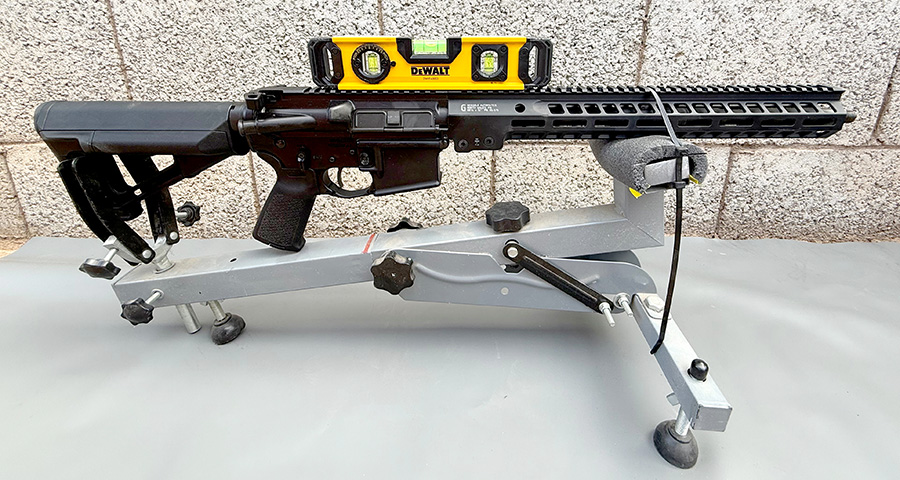
Let’s talk about recoil sled tests. We used one, but only as a disqualifier. Any muzzle brake or comp that didn’t have a reduction in sled travel of at least approximately 25% didn’t make it further. This mostly weeded out linear compensators and devices that are trying to claim to do everything: “recoil reduction, with ‘no’ concussion, and flash hiding characteristics” – masters of none. Here’s the thing, though…recoil sled tests allow you to calculate a delta between a control (i.e., the distance the sled travels when the rifle has a naked muzzle) and the sled distance traveled with a given device…but repeat after me: “sled movement calculations are not the same as recoil reduction”. How could that be?
Why Sled Tests Only Go So Far
Because recoil is an “event” that is happening in 3 dimensions (rearward recoil on the X axis, muzzle rise and the Y axis, and any sort of lateral movement or twisting on the Z axis). Boiling down a recoil impulse to a simple one-dimensional calculation only gives you a good approximation of recoil reduction. They have their place, but they aren’t the whole story. Sled tests do not provide insight into muzzle rise (after all, many muzzle brakes are muzzle brake and compensator hybrids), and they heavily favor muzzle brakes that only care about recoil reduction above all else, to the point they are obnoxiously unpleasant to use. In short, it doesn’t take into account a little something called biomechanics.
Muzzle Brakes and Biomechanics: Beyond the Recoil Sled
Biomechanics matter. At Talking Guns, we’re shooters. How a competent shooter shoulders and grips their rifle, and the rifle’s center of gravity with a full magazine, is going to be different than a static sled where the rifle is strapped into. Sled-data recoil testing has its place, but we believe you need to get out there and put time behind gear, and when it comes to muzzle brakes, we’ve put them in all sorts of different scenarios: indoors, outdoors, next to walls, off barriers, shooting and moving, prone in the Arizona dirt—the works…and of course a lot of rapid fire. In short, we need to get a sense of how that recoil impulse feels in the real world and what our overall experience with the device was. Sticking just to a static indoor bay at a range or a rifle in a sled is too one-dimensional.
How’s the concussion for the shooter? Does it piss off your buddies when they stand to the side? Does the brake/comp hybrid overcompensate? What was reticle movement like through the red dot during rapid fire? Did we run into accuracy or grouping issues? You only find that out during range time. We especially love testing muzzle brakes with forced-reset triggers and, when available, on true select-fire lowers, because there’s no faking 700–800 rounds per minute to demonstrate controllability and muzzle rise (or lack thereof).
Every brake on this list offers significant recoil reduction—and honestly, splitting hairs over 52% vs. 46% “recoil reduction” doesn’t matter nearly as much as real-world feel and all the other factors at play.
When evaluating muzzle brakes and comps, our testing rifles were set up consistently: 5.56 AR-15s, 1/2×28 threads, 16” barrels, mid-length gas systems, and nearly always used free-floated barrels, and M-LOK rails 13”-15” in length, and a mix of ammo—primarily M193-profile 55gr from multiple brands, with some M855 62gr thrown in.
Muzzle Brakes & Barrel Length
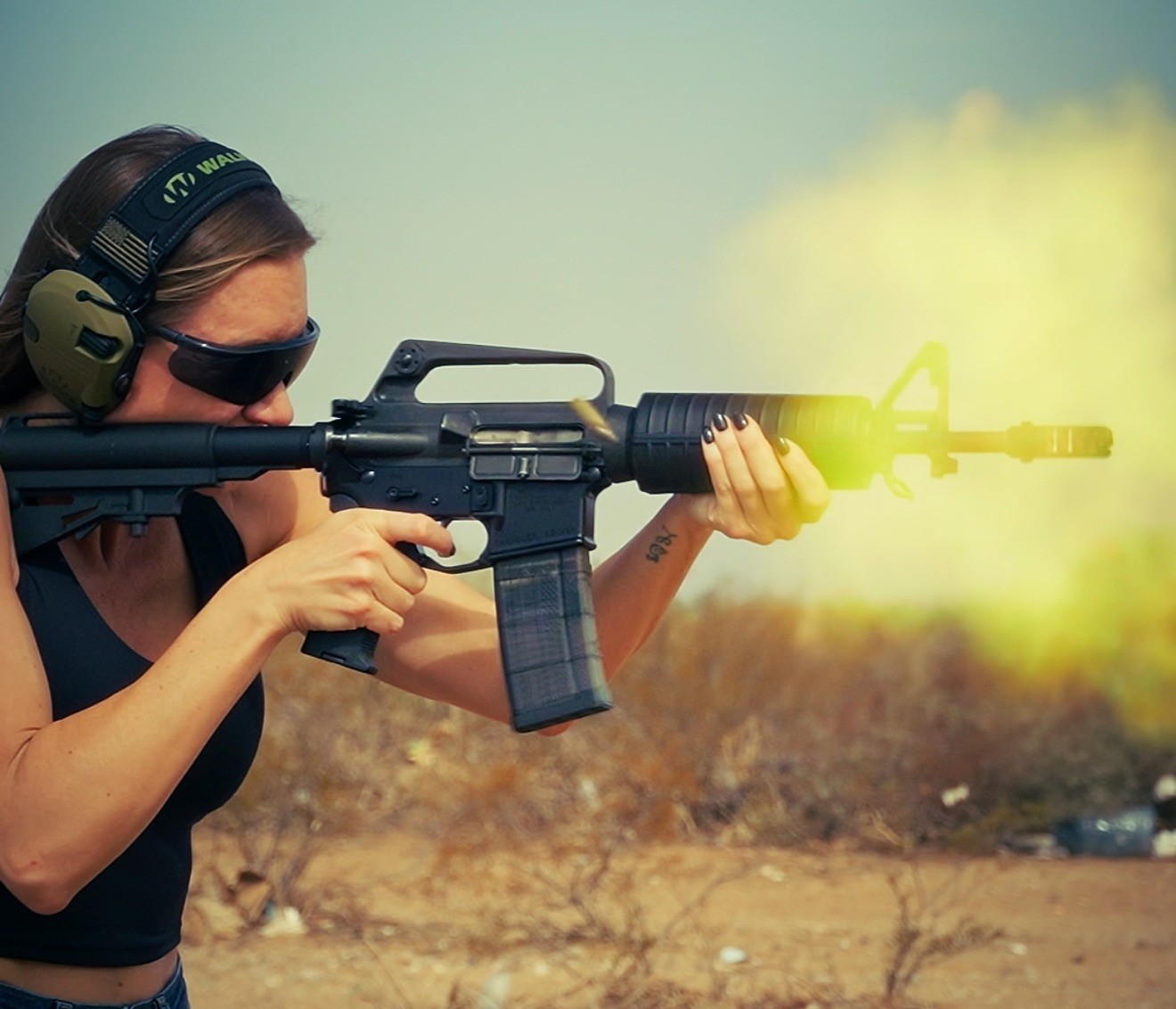
Whether your AR-15 is a rifle, braced pistol, or short-barreled rifle (SBR), barrel length matters – a lot. The shorter your barrel is, the greater the pressure is at the bore. If you put a high-quality muzzle brake on your 16” carbine and then put that same brake on a 10.5” SBR, you’ll notice that the brake is much “louder,” and the flash is incredibly pronounced. I put loud in quotes because what you’re actually experiencing is a pressure wave that is much more intense on that shorter barrel – what you’re experiencing is concussion.
Concussion & Recoil Reduction
This is what almost nobody talks about. Some brakes are certainly less concussive than others. People often measure recoil reduction in some sled, make a calculation, and declare a muzzle brake “the best” based purely on that math. That metric isn’t meaningless. We’re not knocking their efforts, but “the best” muzzle brakes and comps don’t simply have the highest percentage of recoil reduction – we believe they should also keep concussion manageable – it’s a balancing act. Winning in the category of “most recoil reduction” at the cost of being so obnoxiously concussive it’s painful to use makes the device useless. Because concussion is from a pressure wave, those with a deviated septum, those intending to run a brake on a short barrel, or those shooting indoors frequently (especially next to a wall) should keep balanced concussion in mind.
Muzzle Brakes & Flash Signature
Muzzle brakes can often be blamed for muzzle flash, and if you experience more flash than you like, there are two things to consider beyond the brake itself:
- Barrel length: the shorter the barrel (especially the shorter you go below 16”), the more flash you’ll experience
- Ammunition quality: flash retardant is part of the powder’s formula. Higher quality ammo tends to have more of it, but the amount varies considerably by brand and specific load. For duty/carry purposes, loads like Speer Gold Dot 223 REM and Hornady TAP have notably low inherent flash. Even training ammunition can vary widely… try a few different quality brands.
The Shortlist: The Best AR-15 Brakes and Comps (for 2026)
- Walker Defense Research NERO 556
- Lantac Dragon
- Dead Air Keymo
- Taran Tactical GM Interceptor AR15 Compensator
Honorable Mentions
- Surefire SOCOM
- Ultradyne Apollo Max
One Brake We’re Looking Out For
- Blackout Defense Plan B Compatible Hybrid
| Product | What Stands Out | Best For | Price |
| WDR NERO 556 | Balances ultra-flat shooting and recoil reduction with managed concussion. 3D-printed Inconel. | Forced-reset Triggers (FRTs), rapid fire, and full auto. | $179 |
| Lantac Dragon | Competition-proven, Short Energy Pulse system, multiple QD suppressor options. | Matches, fast drills | $143 |
| Dead Air KeyMo | Suppressor-ready (KeyMo), easy swap, lower shooter concussion | KeyMo can, and those wanting a little less concussion | $89 |
| Taran Tactical GM Interceptor | Ultra-flat hybrid comp/brake, value pricing. | 3-gun, fast follow-up shots | $89 |
| Surefire SOCOM | Designed for Surefire suppressors, trusted in duty setups | Running a surefire can | $170 |
| Ultradyne Apollo Max | Industry-leading recoil reduction, rear-angled ports | Recoil-sensitive shooters wearing doubled-up ear pro | $155 |
Walker Defense Research NERO 556 Muzzle Brake Compensator Hybrid
Get it here: Walker Defense Research | Optics Planet Approx. $179
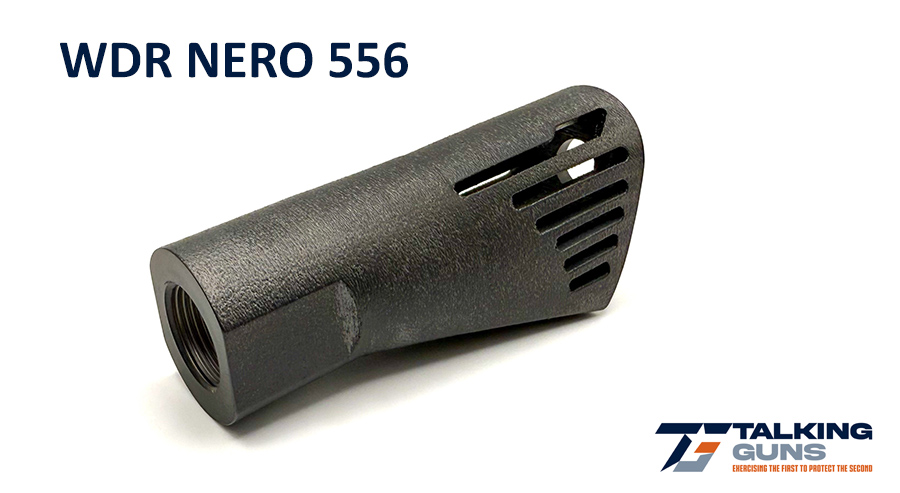
We love seeing real innovation, and the NERO 556 is exactly that. Out on the range, this brake felt genuinely balanced—muzzle rise was gone, recoil was tamed, and concussion was surprisingly reasonable for a hybrid brake/comp. I ran it full-auto with a Magpul D-60 and had no trouble keeping the sights flat through the whole mag dump, without getting walloped by concussion. Is it concussion-free? Of course not, it’s still a muzzle brake, but it’s far from obnoxious.
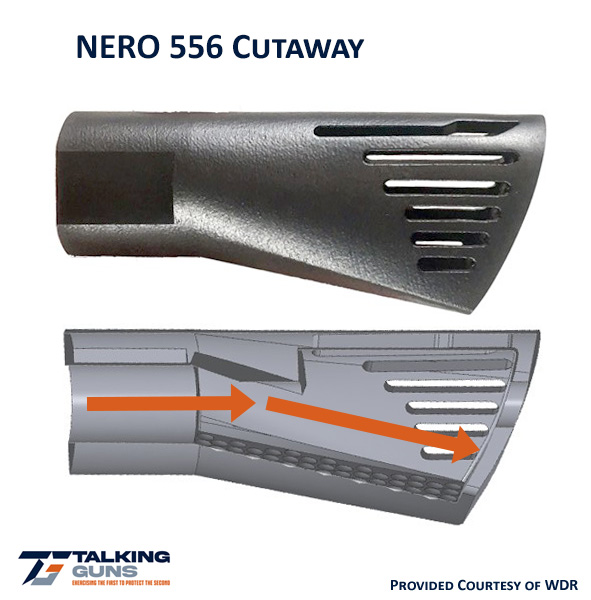
At first, we wondered about the unusual shape. We reached out to WDR for the backstory. They used fluid dynamics to rethink brake design, landing on a shape so complex it has to be 3D-printed instead of traditionally machined. It’s made from Inconel 718—the same superalloy used in jet engines and rocket nozzles. If you haven’t heard of Inconel before, it’s a metal alloy used in high-heat and high-pressure environments. WDR sent us a cutaway to nerd out on so you could see the insides of the brake. It shows how gases are angled into a curved surface below the bore for efficient recoil control, while slat-like ports help break up and disperse concussion.
- Recoil reduction: Strong—noticeably dulls the recoil impulse on 5.56 AR-15s.
- Muzzle rise: Non-existent. This is the NERO’s superpower.
- Concussion: Moderate—very manageable, especially for the shooter.
- Best for: Use with FRTs (forced reset triggers), if you’re not going to be running suppressed…this is the way.
- Cons? It’s not inexpensive. I wish it were also a suppressor mount since it’s made from Inconel.
- Any Caveats? This is where biomechanics comes into play 100%. When we say muzzle rise is non-existent, be sure not to pull down on the handguard, or you’ll actually dip the muzzle. Just be mindful of your grip and muscle memory. It may take a little adjustment and self-awareness.
Lantac Dragon
Get it here: LANTAC USA Approx. $143
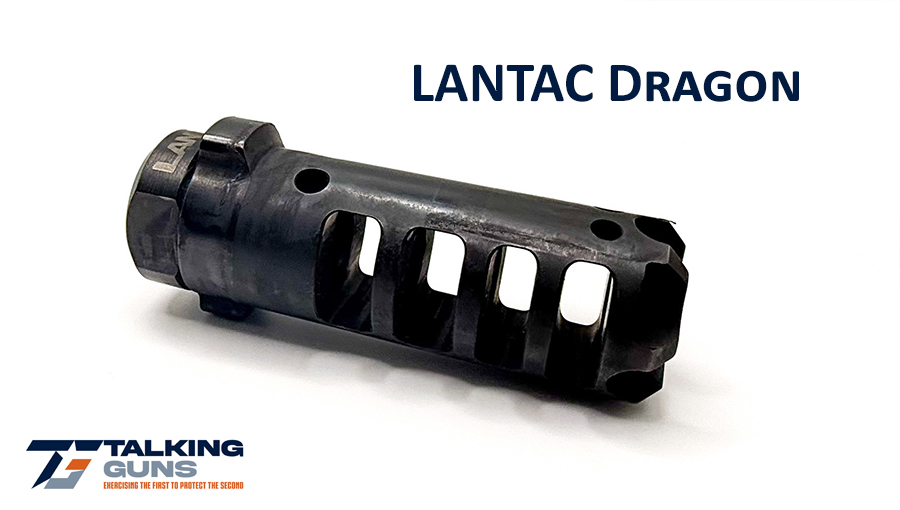
I’ve used a LANTAC Dragon for years, and they’re well-made, solid brakes. The actual LANTAC Dragon pictured above is my personal brake I’ve run for a long time – this particular one is designed as a Gemtec suppressor host. It’s a traditional muzzle brake design made from nitrided 17-4 stainless steel, and the upward porting and the lateral port arrangement come together to make full-auto very controllable. They call it their Short Energy Pulse system, and it’s pretty dialed in. One notable side effect is the concussion. It’s not horrible for the shooter, but you’ll notice it. While they’re known for their brake’s performance, they also offer versions that allow for suppressor attachments on specific platforms such as ASR, KeyMo, and Plan B.
I have one currently on my Colt 733 clone from Heat with a Rarebreed FRT, and it is an absolute blast. Yes, an 11.5” barrel is shorter than you want to go when using this brake, but I knew that going into it. Recoil reduction on a short barrel is still excellent, but it dials up the concussion. I recommend that most people run their Lantac Dragon on a barrel 16” or longer.

- Recoil reduction: Excellent—takes the edge off even rapid fire.
- Muzzle rise: Nearly eliminated; great for competition or fast drills.
- Concussion: Moderate to High.
- Best for: Competitive shooters or anyone chasing maximum control, and who don’t mind a bit more blast.
- Cons? It’s on the expensive side, and the concussion is notable. Flash was pronounced but depended on ammunition.
- Any Caveats? For suppressed use, multiple models are available for various QD suppressor attachment methods. If you run a LANTAC Dragon that’s not made to be a suppressor host, a crush washer will work just fine. If you run one that supports using a suppressor, this changes things, and you must use a shim kit.
Dead Air KeyMo
Get it here: Dead Air | Battlehawk Armory Approx. $89
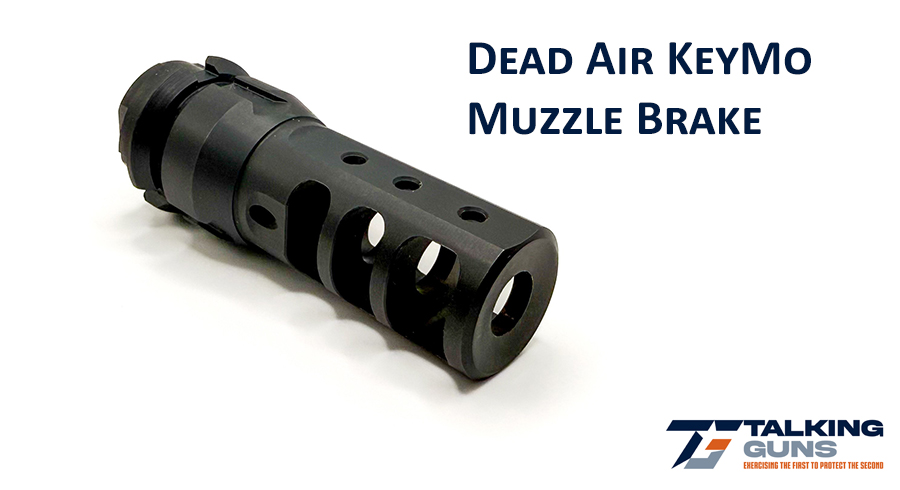
Made from 4140 HT Steel and nitrided, the Dead Air KeyMo muzzle brake is excellent as a standalone muzzle brake and also accepts KeyMo-equipped suppressors, such as the Dead Air Sandman. It is installed via shims. It has 1/2×28 threads, but it’s bored out for .30 caliber. This is subjective, but I felt that the concussion was lower for the shooter, but still concussive for those standing laterally nearby (though still not as bad as I was expecting it to be). I suspect that the larger bore size allows for gases to blow by and around the projectile, allowing some concussion to escape forward. If concussion bothers you, you can consider using a blast shroud like the Pyro 2.0 to direct gases forward, but this does sap the recoil reduction effect of the muzzle brake.
- Recoil reduction: Decent—solid performance for general use, but I felt that Lantac was a little softer.
- Muzzle rise: Kept in check; very easy to stay on target but still present.
- Concussion: Moderate—it was lower than expected. Tolerable for most shooters.
- Best for: AR-15 owners who want a brake that also works as a suppressor mount that uses KeyMo.
- Cons? It’s bored for .30 cal, so it’s not as “gas efficient” for 5.56mm, but it’s still effective.
- Any Caveats? Yes, as a suppressor host mount, DO NOT INSTALL WITH A CRUSH WASHER. Yes, I said it was bored for .30 caliber, but this has to do with suppressor alignment when slipping a can over the top. Use a shim kit with Rocksett. If you’re unsure how to do it, have a professional do it. Using a crush washer with a brake that mounts a suppressor over will cause baffle strikes to your can.
Taran Tactical GM Interceptor AR15 Compensator
Get it here: Taran Tactical Approx. $89
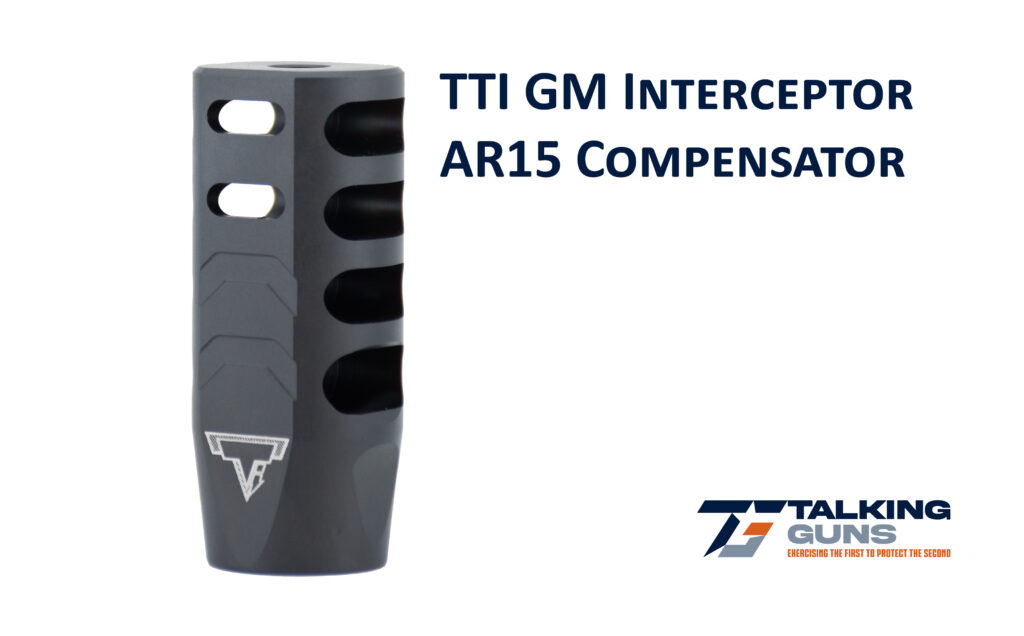
All in all, I feel like the GM Interceptor is not talked about enough. At around $90, it’s a solid competition muzzle brake comp hybrid. We might be mincing terms – I would consider this primarily a stout muzzle brake with compensating ports as well. It’s well-made from stainless steel and has a black nitrided surface. Very flat shooting. Installs via a standard mil-spec crush washer. It’s not designed to host a suppressor, and that’s ok. It’s designed to transform your rifle’s recoil impulse into a soft-shooting, ultra-flat, controllable one, where your reticle barely goes off target. This is a lot of fun with an FRT if you get a chance to do it. The trade-off was concussion, but my follow-up shots were remarkably fast and on target.
- Recoil reduction: Excellent—solid performance for general use.
- Muzzle rise: Very flat.
- Concussion: Moderate to high – but not bad from the position of the shooter.
- Best for: AR-15 owners who want an excellent competition-oriented brake.
- Cons? Keep concussion in mind, especially for those laterally to your side.
- Any Caveats? No need to aggressively drive the muzzle down. This is a hybrid of a brake and a comp. Let the brake do the work.
Honorable Mentions
Surefire SOCOM Muzzle Brake $170
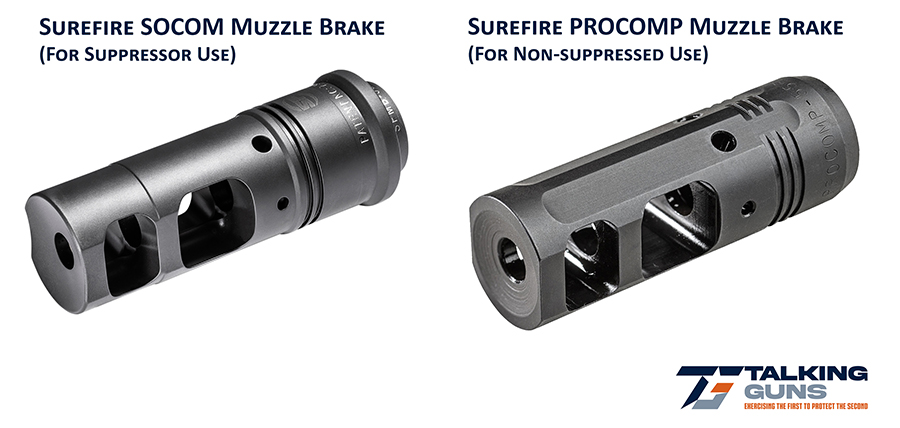
It’s undoubtedly effective as a brake, but I’d only recommend going this route if you go with a Surefire suppressor. It’s a tad expensive for what it is. The ProComp 556 ($89) is the non-suppressor-oriented version that is also much less expensive.
Ultradyne Apollo Max $155
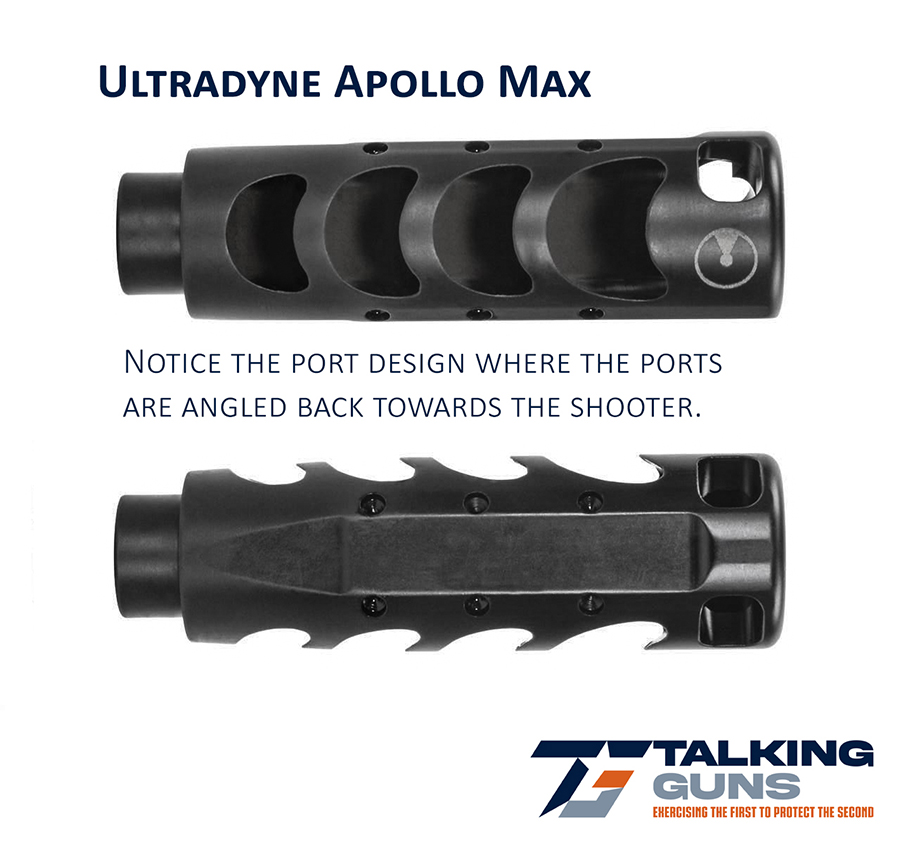
The Apollo Max deserves credit for one thing above all: raw recoil reduction. It’s truly impressive on that front. That said, take a close look at the port arrangements. They don’t simply go out to the side…they are actually angled back towards the shooter. Think of the ports like a speaker. That makes this device very concussive, even for the shooter. If that’s your thing and you don’t mind, have at it – it’ll work great for you, but know what you’re getting into.
One Muzzle Brake to Look Out For
Blackout Defense Plan B Compatible Hybrid | It’s unreleased as of the writing of this article – and we’ll report back on it once we get some trigger time with it. Still, Blackout Defense is known for its high-quality in-house manufacturing and forward-thinking designs. Our curiosity is piqued. For now, they have the KeyMo hybrid, and we can’t wait to use it. More to come from us on this.
Final Thoughts on Which Muzzle Brake to Choose
Every brake on this list will noticeably improve your AR-15’s performance, but the right choice depends on your setup, shooting style, barrel length, and tolerance for concussion. As always, try a few for yourself if you can—because the best spec sheet in the world can’t replace real trigger time.
FAQ: AR-15 Muzzle Brakes & Compensators [2026]
- Q: What is the difference between a muzzle brake and a compensator?
- A: A muzzle brake is designed to reduce felt recoil, while a compensator is engineered to minimize muzzle rise. Many modern devices combine both features for improved shooting control.
- Q: How do I install a muzzle brake on my AR-15?
- A: Most muzzle brakes are installed using a crush washer or a shim kit. For those brakes that install using a crush washer, they nearly always install the same way a mil-spec A2 birdcage does. For brakes that double as suppressor mounts, use a shim kit and avoid crush washers to ensure proper alignment. If you don’t have the proper tools, experience, or are just not confident, take it to a professional. Just be sure to do it right.
- Q: Is an A2 birdcage considered a compensator?
- A: The venerable A2 birdcage flash hider is just that – a flash suppressor. Due to its closed-bottom design, it technically has a very minor compensating effect, but it’s really not much. Don’t use it for that. Legally and functionally classified as a flash hider.
- Q: Why use a shim work versus a crush washer when installing a muzzle brake on my AR-15?
- A: Shims are used because they preserve precise bore alignment, which is critical for safe suppressor use. Suppressors have very tight bore clearances extending several inches beyond the barrel threads, so even minor concentricity errors become magnified. While non-suppressor muzzle brakes often use crush washers—and the slight, uneven deformation usually doesn’t matter over a short 1–2 inch brake—that same deformation can cause dangerous misalignment and baffle strikes when a suppressor is involved. For suppressor hosts, shims combined with proper torque and Rocksett are the accepted method, whereas crush washers rely on deformation and tension to hold the device in place.
- Q: Are AR-15 muzzle brakes legal in all states?
- A: Not legal advice, but federally, muzzle brakes are legal; however, some states regulate them through feature-based laws where certain muzzle devices or threaded barrels can make a rifle non-compliant depending on configuration. In free states, they’re generally unrestricted, while restrictive states may require non-flash-suppressing designs or permanent pin-and-weld installation. Overall, muzzle brakes are typically among the least restricted AR-15 accessories—just know your state’s rules.
- Q: Will a muzzle brake make my AR-15 louder?
- A: Yes, most muzzle brakes increase perceived noise, especially for shooters standing laterally to the sides or at the shooter’s position. Shorter barrels and indoor use can further amplify this effect.
- Q: What if I notice more muzzle flash after installing a muzzle brake on my AR-15?
- A: With brakes, flash can appear more pronounced—especially in low light. You can often dial this down significantly with ammunition choice, as some loads use flash-retardant powders, so trying different brands or duty-type loads (especially high-quality loads such as Hornady TAP) in low light can significantly reduce what you see.
- Q: Do muzzle brakes affect accuracy?
- A: A properly installed muzzle brake should not negatively affect accuracy. In some cases, it can even improve follow-up shot placement by reducing recoil and muzzle movement.
Affiliate Disclosure
Some of the links above are affiliate links, which means if you purchase through them, we may earn a small commission—at no extra cost to you. This helps us keep the reviews honest, the ammo stocked, and the content coming. We only recommend products we personally believe in. Thanks for supporting Talking Guns!